What Is a Hotel Access Control System?
A hotel access control system is a networked security infrastructure that regulates physical entry to rooms, floors, and restricted zones across a hospitality property. Unlike standalone residential locks, hotel access control operates as a system — linking individual door locks with a central management platform that handles credential issuance, permission hierarchies, access logging, and integration with property management software (PMS).
| Component | Function | Examples |
|---|---|---|
| Door lock hardware | Electronic lock installed on each door — reads credentials, engages/disengages deadbolt | RFID mortise lock, BLE smart lock, magstripe reader lock |
| Credential media | Physical or digital token that authenticates the user | IC card (Mifare 13.56MHz), magstripe card, mobile key (BLE/NFC), fingerprint, PIN code |
| Encoder/issuing device | Hardware at the front desk that programs credentials for guests | RFID card encoder, mobile key platform, card printer |
| Management software | Central platform for access rules, credential lifecycle, and audit trails | TTLock cloud dashboard, proprietary hotel lock software, PMS-integrated platform |
| Network infrastructure | Communication layer between locks and management platform | Bluetooth gateway, Wi-Fi bridge, Zigbee mesh, RF gateway, offline (standalone) |
The distinguishing factor of hotel-grade access control versus residential smart locks is the credential management workflow. Hotels must issue and revoke hundreds of unique credentials daily, enforce time-bounded access (check-in to check-out), manage hierarchical permission levels (guest, housekeeping, floor manager, master override), and maintain auditable records of every access event.
Evolution of Hotel Door Lock Systems
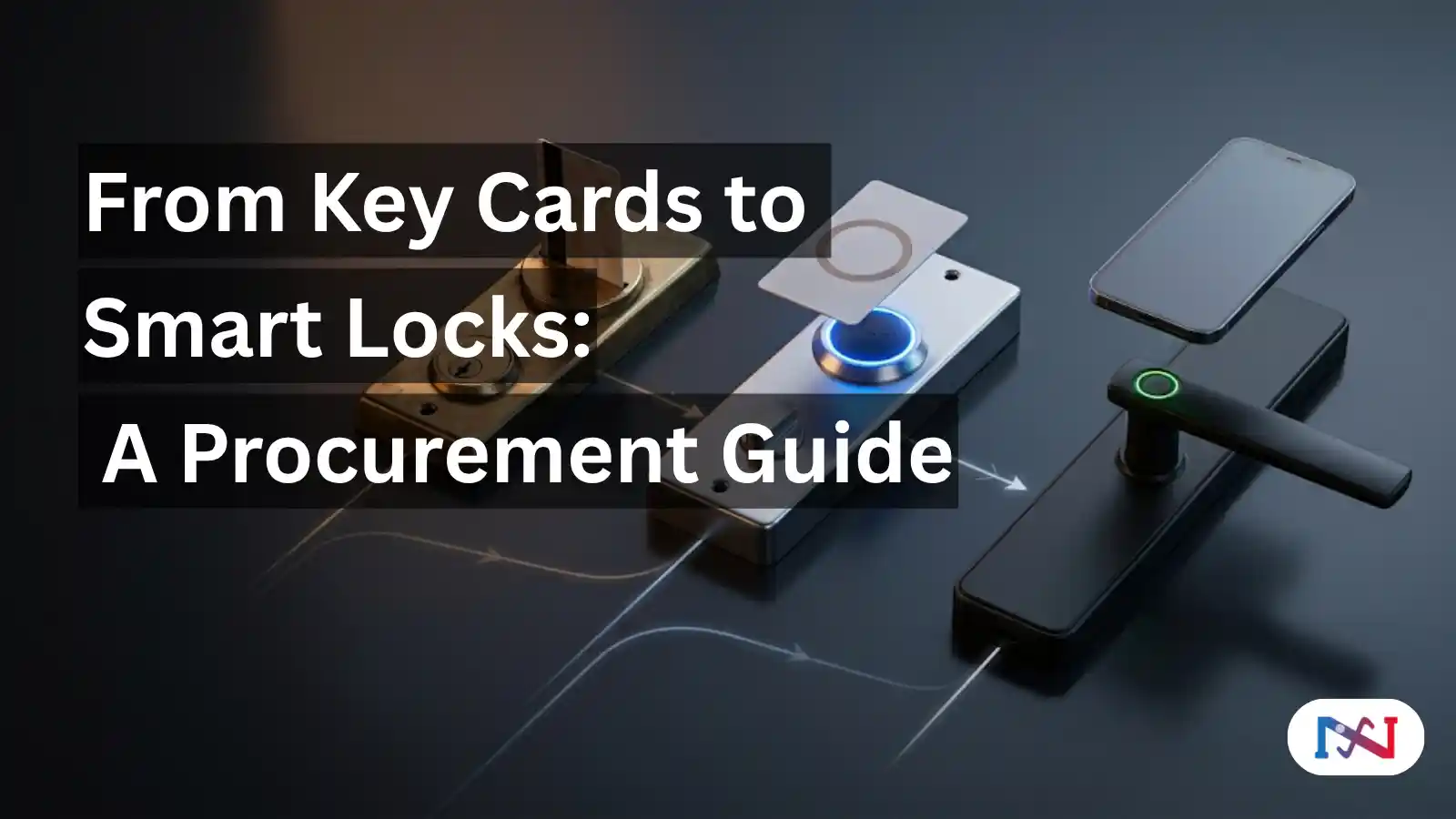
Hotel door lock technology has progressed through four distinct generations, each addressing the limitations of its predecessor. Understanding this evolution provides procurement context for evaluating current options.
Generation 1: Mechanical Key Systems
Traditional pin-tumbler cylinder locks with physical metal keys. These systems have the lowest upfront cost (approximately $25–$50 per door for hardware alone) but carry the highest ongoing operational burden. Lost keys require full cylinder replacement, master key systems create single-point security failures, and there is zero access logging capability. A 60-room hotel with 80% occupancy generates approximately 35,000 lock interactions annually — mechanical systems cannot track any of them. Mechanical keys are now limited to budget motels and staff-only utility doors where compliance with guest privacy standards is not required.
Generation 2: Magstripe Card Locks
Magnetic stripe card locks encode access data onto the card’s magnetic band, which is read by a swipe mechanism on the door lock. Magstripe technology introduced reprogrammable credentials — the same card could be re-encoded for different rooms. However, magstripe cards demagnetize when exposed to smartphones, wallets, or other magnetic fields, causing frequent guest lockouts that require front desk reactivation. The magnetic encoding is also vulnerable to cloning using inexpensive card readers available commercially. Magstripe is now classified as legacy technology in the hospitality industry, with major lock manufacturers phasing out new magstripe hardware in favor of RFID-based systems.
Generation 3: RFID Card Systems (Current Standard)
RFID (Radio Frequency Identification) hotel locks use contactless proximity technology to authenticate credentials. The guest holds an IC card near the door reader — no physical contact required. The industry standard operates at 13.56MHz using ISO 14443 Type A protocol (Mifare Classic, Mifare Plus, and Mifare DESFire card formats). RFID cards cannot be demagnetized, are significantly harder to clone than magstripe, and support AES-128 or AES-256 encryption depending on the card type. RFID systems dominate the current hotel market, with estimated adoption across 70%+ of mid-scale and upscale properties globally.
Generation 4: Smart Lock and Mobile Key Systems
The current frontier adds Bluetooth Low Energy (BLE), NFC, Wi-Fi connectivity, and biometric authentication to hotel locks. Smart lock systems support mobile keys (smartphone-based room access via BLE or NFC), remote lock management through cloud platforms, and multi-modal authentication combining fingerprint, PIN code, IC card, and app access on a single device. Smart locks are particularly suited to boutique hotels, serviced apartments, Airbnb and short-term rental operations, and hospitality properties that prioritize contactless guest experiences. The global hotel lock market was valued at approximately $4.89 billion in 2026, with a projected 13.61% CAGR through 2035 — driven primarily by smart lock and mobile key adoption.
Types of Hotel Access Control Technologies Compared
The following table compares the four primary hotel access control technologies across the specifications that matter most to procurement teams, property managers, and hospitality integrators.
| Specification | Magstripe | RFID (13.56MHz) | BLE Mobile Key | Multi-Access Smart Lock |
|---|---|---|---|---|
| Credential type | Magnetic stripe card | IC card (Mifare) | Smartphone app (BLE/NFC) | Fingerprint + PIN + IC card + app |
| Frequency/protocol | Magnetic encoding | 13.56MHz ISO 14443A | Bluetooth 5.0 / NFC | BLE 5.0 + 13.56MHz RFID |
| Encryption | None (plaintext data) | AES-128/256 (Mifare Plus/DESFire) | AES-128 (app-level) | AES (card) + app encryption |
| Clone resistance | Low — easily duplicated | High — encrypted sectors | High — device-bound tokens | High — multi-factor |
| Demagnetization risk | High — smartphones, magnets | None | N/A | None (card) / N/A (biometric) |
| Credential capacity per lock | Varies by system | 200–500 cards | Platform-dependent | 100–200 fingerprints + 100 cards |
| Access logging | Limited or none | 500–2,000 events locally | Cloud-based (unlimited) | Cloud + local storage |
| PMS integration | Serial/proprietary | TTLock API / proprietary SDK | Cloud API / webhook | TTLock / Tuya API |
| Power source | 4× AA batteries | 4× AA batteries | 4× AA or Li-ion | 4× AA or Li-ion rechargeable |
| Battery life | ~8,000 operations | ~10,000–12,000 operations | ~10,000 operations | ~12,000 operations |
| Connectivity | Standalone (offline) | Standalone or gateway | BLE + Wi-Fi gateway | BLE + Wi-Fi (optional) |
| Emergency access | Mechanical key | Mechanical key + USB power | Mechanical key + USB power | Mechanical key + USB-C power |
| Hardware cost range (per lock) | $30–$80 (legacy) | Contact manufacturer for project pricing | $150–$400 (retail brands) | Contact manufacturer for project pricing |
| Best suited for | Legacy/budget properties | Mid-scale to upscale hotels | Tech-forward hotels, chains | Boutique hotels, Airbnb, serviced apartments |
Retail-brand installed costs including software licensing, encoder hardware, gateway infrastructure, and installation labor typically run 2–3× the hardware unit price depending on system complexity and property size. Factory-direct sourcing from manufacturers reduces per-unit hardware cost by 50–70% compared to retail channels — contact our team for project-level pricing based on your deployment size and specifications.
RFID Hotel Lock Systems: Technical Specifications for Procurement
RFID card-based systems represent the majority of hotel access control deployments worldwide. For procurement teams evaluating RFID hotel locks, the following specifications define hardware performance and compatibility.
The operating frequency for hotel RFID locks is 13.56MHz, compliant with ISO 14443 Type A. This standard supports Mifare Classic (basic encryption, widely adopted), Mifare Plus (AES-128 upgrade path from Classic), and Mifare DESFire EV1/EV2/EV3 (AES-256, highest security grade for hospitality). Lower-frequency 125kHz systems (EM4100 standard) still appear in budget installations but lack encryption entirely and are not recommended for guest room applications.
The Nice Smart SU7-03 RFID hotel lock operates on 13.56MHz Mifare with AES card encryption, supports a 500-card capacity per lock, and includes a hierarchical card management system with five card types: master card, floor card, building card, guest card, and emergency override card. The lock body measures 370 × 25 × 80mm, fits door thicknesses from 35–65mm, runs on 4× AA batteries for approximately 10,000 operations, includes USB emergency power input, and carries CE, FCC, RoHS, and IP67 certifications. This card-only configuration simplifies guest onboarding for traditional hotel operations where front-desk card issuance is the standard workflow.RFID Credential Hierarchy for Hotel Operations
Hotel RFID systems require structured credential hierarchies to support daily operations. A properly configured hotel card system includes the following permission levels:
| Card Type | Access Scope | Typical Holder | Override Authority |
|---|---|---|---|
| Master card | All locks in the property | General manager / security director | Overrides all other cards |
| Building card | All locks in a specific building | Building manager | Overrides floor and guest cards |
| Floor card | All rooms on a designated floor | Housekeeping supervisor | Overrides guest cards for assigned floor |
| Guest card | Assigned room only | Hotel guest | No override — time-bounded access |
| Emergency card | All locks — immediate override | Emergency response / fire safety officer | Overrides all cards including master |
This hierarchy enables properties to manage access at scale. A 200-room hotel with 15 floors can operate with 5–10 staff cards plus a rotating pool of guest cards, all managed from a single front-desk encoder. Guest card validity is time-bounded to the reservation period (check-in time to check-out time), and the card is automatically deactivated when the next guest’s card is encoded for the same room.
Multi-Access Smart Locks for Hotels, Airbnb, and Serviced Apartments
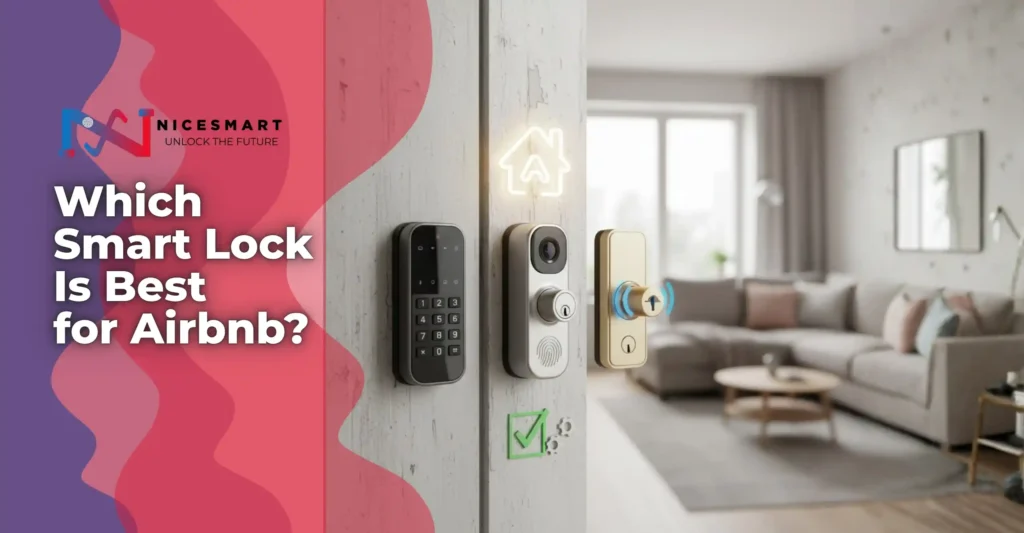
While RFID card-only locks serve traditional hotel operations effectively, a growing segment of the hospitality market requires more flexible access methods. Boutique hotels, Airbnb and short-term rental operators, serviced apartment companies, co-living spaces, and small hospitality groups increasingly deploy multi-access smart locks that combine IC card, fingerprint, PIN code, app control, and mechanical key backup in a single device. This approach eliminates the need for front-desk card issuance entirely — hosts can send temporary PIN codes or app-based access credentials remotely, guests can use fingerprint enrollment for extended stays, and property managers can monitor access logs from a centralized cloud dashboard.
The Nice Smart K9 smart door lock is engineered for this use case. The K9 supports fingerprint recognition (~100 capacity), PIN code (~100 codes), IC card reading at 13.56MHz (~100 cards), doorbell function, and mechanical key backup. The lock is constructed from zinc alloy with a tempered glass touchpad, powered by 4× AA batteries delivering approximately 12,000 operations per battery cycle. Connectivity options include TTLock and Tuya app integration via Bluetooth, with optional Wi-Fi and NFC modules. The K9 includes a human presence sensor for auto-wake, tamper alert notifications, IP67 water and dust resistance, and operates across a temperature range of -20°C to 60°C. Available finishes include gold, champagne, black, and silver — allowing consistent aesthetic matching across different property types.Why Multi-Access Locks Suit Short-Term Rental and Boutique Hospitality
The operational model of Airbnb-style properties and boutique hotels differs fundamentally from traditional full-service hotels. There is typically no front desk, no dedicated reception staff, and no card encoding hardware on-site. Guests arrive at variable times, sometimes outside business hours, and expect self-service access from the moment of booking confirmation.
Multi-access smart locks address these constraints directly. A property manager operating 20 rental units across a city can manage all access from a single smartphone app — generating time-limited PIN codes for each reservation, receiving push notifications when guests check in, reviewing access logs for each door, and revoking access remotely at check-out. The TTLock and Tuya platforms both support this workflow, with TTLock offering gateway-based remote management and Tuya providing Wi-Fi direct connectivity with smart home ecosystem compatibility (Amazon Alexa, Google Home, IFTTT integration).
For properties considering the transition from RFID card locks to multi-access smart locks, the Nice Smart K9 offers a significant advantage: it retains IC card compatibility alongside fingerprint and PIN access, allowing operators to maintain card-based access for staff or loyalty guests while offering app-based and biometric access for the broader guest population.
Hotel PMS Integration: How Lock Hardware Connects to Management Software
Property management system (PMS) integration is the bridge between a hotel’s access control hardware and its operational software — the system that manages reservations, room assignments, billing, housekeeping schedules, and guest profiles. Without PMS integration, front-desk staff must manually encode cards or generate access credentials for each guest, creating bottlenecks during peak check-in periods and increasing the risk of human error.
PMS integration automates this workflow. When a reservation is confirmed or a guest checks in through the PMS, the system automatically triggers credential issuance — programming an RFID card via the front-desk encoder, sending a mobile key to the guest’s smartphone, or generating a time-bounded PIN code. At check-out, the credential is automatically revoked.
Integration Architecture: TTLock and Tuya for Hotel Deployments
Nice Smart hotel locks connect to PMS software through two platform options, each with a different integration architecture:
| Platform | Connectivity | PMS Integration Method | Best Suited For |
|---|---|---|---|
| TTLock | Bluetooth + gateway (Wi-Fi/Ethernet) | RESTful API + webhook callbacks | Hotels, managed properties, multi-site operators |
| Tuya IoT | Wi-Fi direct or Bluetooth + hub | Tuya Cloud API + MQTT protocol | Serviced apartments, Airbnb, smart home ecosystems |
TTLock is the more widely adopted platform for traditional hotel deployments. The TTLock gateway acts as a bridge between the Bluetooth-enabled door lock and the hotel’s network — each gateway covers approximately 10–15 locks within a 15-meter Bluetooth range. The TTLock cloud API supports integration with hotel PMS platforms including Opera PMS, Cloudbeds, Little Hotelier, and other systems that accept webhook or RESTful API connections. Key API functions include remote lock/unlock, passcode generation and revocation, access log retrieval, battery status monitoring, and lock firmware updates.
Tuya IoT is better suited for properties operating within a broader smart home ecosystem. Tuya-connected locks communicate directly via Wi-Fi (no gateway required) and integrate with Tuya Smart app, OEM-branded apps via Tuya’s white-label app service, and third-party platforms including Amazon Alexa, Google Home, and IFTTT. For property managers overseeing scattered rental portfolios rather than centralized hotel buildings, Tuya’s Wi-Fi-direct architecture eliminates the need for gateway hardware at each property.
How to Evaluate Hotel Door Lock System Suppliers
Sourcing hotel access control hardware involves different evaluation criteria than purchasing consumer smart locks. Hotel deployments are project-scale purchases — typically 50 to 5,000+ units — where hardware reliability, certification compliance, supply chain consistency, and after-sales support directly impact guest experience and operational uptime. The following factors should guide supplier evaluation for hotel door lock system procurement.
Certification and Compliance Verification
Hotel locks must meet regulatory requirements in the destination market. At minimum, verify that the supplier holds CE marking (required for European markets under Directive 2014/30/EU for EMC and 2014/35/EU for low voltage), FCC Part 15 certification (required for US market — any device with a digital circuit), and RoHS compliance (Directive 2011/65/EU — restriction of hazardous substances). For water-resistant applications (outdoor corridors, pool areas, exterior entries), IP67 certification per IEC 60529 confirms protection against dust ingress and temporary water immersion. For a detailed breakdown of each certification standard and what it covers, see our guide to smart lock certifications for global markets.Manufacturing Capacity and Lead Times
A supplier’s monthly production capacity determines whether they can fulfill project-scale orders within your construction or renovation timeline. Request specific capacity figures — not vague claims of “large-scale production.” Nice Smart’s Shenzhen facility produces 8,000+ units per month across 30+ models, with standard model lead times of 7 business days and custom OEM/ODM orders at 15–25 business days. For guidance on evaluating manufacturing capabilities during the supplier selection process, refer to our checklist for choosing a smart lock manufacturer in China.OEM Branding and Customization Scope
Hotel chains and hospitality groups frequently require branded lock hardware that maintains consistent visual identity across properties. Evaluate whether the supplier offers logo engraving (laser or pad printing), custom packaging with your brand identity, firmware localization (language, voice prompts, app skin), and finish options (matte black, satin nickel, gold, silver, bronze via PVD or electroplating). Nice Smart provides full OEM branding and customization services including mechanical adaptation for European DIN and American ANSI door standards across 35–120mm door thicknesses.MOQ Flexibility and Mixed-Model Orders
Hotel projects typically require multiple lock types in a single order — RFID card locks for guest rooms, multi-access smart locks for apartment units, cabinet locks for locker rooms, and different finish options across room categories. A supplier that supports mixed-model orders with reasonable minimum order quantities reduces procurement complexity. Nice Smart MOQs start from 20 units on select models, with mixed-model orders supported within a single shipment. For context on the OEM vs ODM manufacturing models and how they affect order flexibility, see our manufacturing guide.
Deployment Planning: Sizing, Phasing, and Installation Considerations
A successful hotel access control deployment requires planning beyond hardware selection. The following considerations affect project timeline, total cost, and operational readiness.
System Sizing by Property Type
| Property Type | Typical Lock Count | Recommended System | Gateway/Encoder Requirements |
|---|---|---|---|
| Budget hotel / motel (20–60 rooms) | 25–70 locks | Standalone RFID card locks | 1 RFID encoder at front desk |
| Mid-scale hotel (60–200 rooms) | 80–250 locks | RFID card locks + TTLock gateway network | 1 encoder + 15–25 Bluetooth gateways |
| Full-service hotel (200–500 rooms) | 250–600 locks | RFID + mobile key hybrid | 2 encoders + 30–50 gateways + PMS integration |
| Boutique hotel / serviced apartments (10–50 units) | 15–60 locks | Multi-access smart locks (K9 type) | App-based management — no encoder needed |
| Airbnb / short-term rental portfolio (scattered) | 1–50 locks per operator | Wi-Fi smart locks (Tuya platform) | No gateway — Wi-Fi direct per lock |
Lock counts should include guest room doors, connecting doors, common area doors (gym, pool, business center), staff areas (housekeeping closet, maintenance room, back office), elevator floor readers, and external entry points. A 100-room hotel typically requires 120–140 lock points when all access zones are covered.
Phased Deployment for Operating Properties
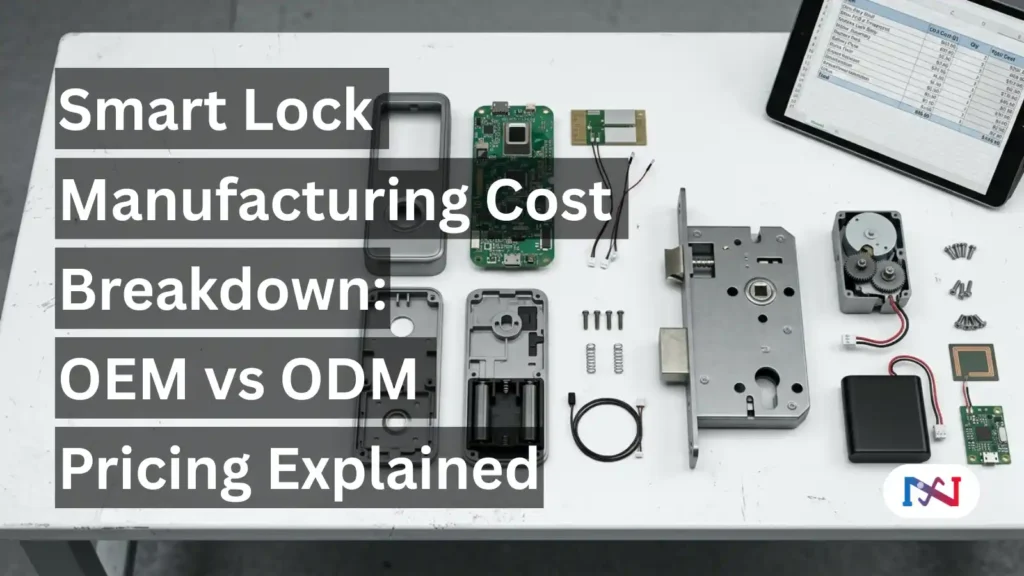
Hotels that are upgrading from legacy lock systems while maintaining guest operations should plan phased deployments — typically one floor or wing at a time. This approach limits guest disruption, allows the installation team to refine their process on early phases, and spreads capital expenditure across multiple purchase orders. Nice Smart supports phased delivery schedules aligned with installation timelines, with dedicated project managers assigned for orders exceeding 200 units. For properties managing the logistics of international hardware procurement, our guide to importing smart locks from China covers shipping, customs, and delivery coordination.
Installation and Door Preparation
RFID hotel locks and smart locks are typically mortise-type installations requiring a rectangular pocket cut into the door edge for the lock body, plus a circular bore for the handle spindle. Standard mortise preparations accommodate door thicknesses from 35mm to 65mm (for the SU7-03) or 35mm to 120mm with mechanical adaptation for broader smart lock models. Wood and metal doors are both supported across the Nice Smart product range.
Each order includes installation documentation with door preparation templates (cutout dimensions), wiring diagrams where applicable, and programming instructions for card enrollment and system configuration. Video installation guides are available for select models, and on-site installation training can be arranged for deployments exceeding 500 units. Browse the full smart lock product catalog to compare lock body dimensions and door compatibility across models.
Frequently Asked Questions About Hotel Access Control Systems
What is a hotel access control system and how does it work?
A hotel access control system is an electronic security infrastructure that manages who can enter guest rooms, staff areas, and common facilities across a hospitality property. It works by combining door lock hardware (RFID readers, smart locks, or biometric devices), credential media (IC cards, mobile keys, fingerprints, PIN codes), management software for credential issuance and access logging, and network infrastructure connecting locks to a central platform. When a guest presents valid credentials to the door reader, the lock verifies the credential against stored permission rules and either grants or denies access, while logging the event with a timestamp and credential identifier.
What is the best type of access control for hotels?
The most appropriate hotel access control technology depends on property type and operational model. RFID card systems operating at 13.56MHz (Mifare standard) remain the most widely adopted solution for mid-scale and upscale hotels — they balance security, ease of use, and cost-effectiveness. Boutique hotels, serviced apartments, and short-term rental properties increasingly prefer multi-access smart locks that combine IC card, fingerprint, PIN code, and app access, eliminating the need for front-desk card encoding. Full-service hotel chains with high-volume check-in requirements often implement hybrid systems — RFID cards for standard operations with mobile key capability as an optional upgrade.
How do hotel key card systems integrate with PMS software?
Hotel lock systems connect to property management software through platform APIs. TTLock provides a RESTful API with webhook callbacks that links to PMS platforms including Opera PMS, Cloudbeds, and Little Hotelier. When a guest checks in through the PMS, the integration triggers automatic credential issuance — programming an RFID card or generating a mobile key. Tuya IoT uses a Cloud API with MQTT protocol for similar functionality, better suited for Wi-Fi-connected locks in serviced apartments and rental properties. The integration method depends on the lock platform (TTLock or Tuya) rather than the lock hardware itself.
What certifications should hotel door locks have?
Hotel locks should carry CE marking (required for European markets), FCC Part 15 certification (required for US market), and RoHS compliance (environmental standard for hazardous substances). IP67 certification per IEC 60529 is required for locks installed in water-exposed locations such as outdoor corridors and pool access doors. Additional certifications like UL 294 (US access control standard) and ANSI/BHMA Grade 1 (rated for 800,000 lock/unlock cycles) may be required depending on the destination market and hotel brand standards.
What happens if the hotel lock batteries die?
All hotel-grade electronic locks include emergency access provisions. A mechanical key backup allows manual entry at any time. Additionally, most modern hotel locks include a USB or USB-C emergency power port on the exterior panel — a portable battery bank can provide temporary power to operate the electronic lock mechanism when internal batteries are fully depleted. Low-battery alerts are triggered well before full depletion, giving maintenance staff advance notice to replace batteries during routine rounds.
How much do hotel access control systems cost?
Hardware costs vary by technology type and sourcing channel. Retail-brand RFID hotel locks sell for $150–$400+ per unit through distributor channels. Retail-brand multi-access smart locks with fingerprint, PIN, card, and app capability range from $150–$350+ per unit. Factory-direct sourcing from a manufacturer reduces per-unit hardware cost by 50–70% compared to these retail prices, with exact pricing determined by model selection, order volume, and customization scope. Total installed cost per door — including software licensing, encoder hardware, gateway infrastructure, installation labor, and commissioning — typically runs 2–3x the hardware unit price. Contact our team for a project-level quotation based on your property size and lock configuration requirements.
Can different lock models be mixed in a single hotel order?
Yes. Mixed-model orders are standard practice for hotel projects. A typical deployment might combine RFID card-only locks (such as the SU7-03) for guest rooms, multi-access smart locks (such as the K9) for premium suites or serviced apartment units, cabinet locks for locker rooms or storage areas, and glass door locks for lobby or pool access points. Nice Smart supports mixed-model orders with consistent branding across all lock types within a single shipment, with MOQs starting from 20 units on select models.
What warranty and after-sales support should hotel lock suppliers provide?
Standard B2B warranty for hotel lock hardware should cover 12months from delivery date, including manufacturing defects in materials and workmanship. For project-level orders, extended warranty terms up to 12 months are available from some manufacturers. After-sales support should include spare parts availability for rapid replacement, technical documentation (installation guides, programming instructions, API documentation), and responsive account management — ideally with 24-hour response times via direct communication channels. Nice Smart provides dedicated project managers for orders exceeding 200 units, stocks spare parts for all active models, and offers after-sales support via WhatsApp and email.
Planning a hotel access control deployment? Whether you need RFID card locks for a 500-room hotel project or multi-access smart locks for a portfolio of serviced apartments, Nice Smart’s engineering team can recommend the right hardware configuration, provide project-level pricing, and coordinate phased delivery aligned with your installation timeline. Request hotel lock project pricing or contact us via WhatsApp.