Hotel smart locks are electronic access control devices that replace mechanical key systems with RFID card, mobile Bluetooth, PIN code, or biometric access for guest rooms, staff areas, and common spaces. The dominant technology for hotel deployments is 13.56MHz RFID card access using Mifare Classic, Mifare Plus, or DESFire card protocols with AES encryption, managed through a hierarchical card system (master, floor, building, guest, and emergency override cards). Modern hotel locks integrate with property management systems (PMS) via the TTLock platform API, supporting remote room assignment, mobile check-in via Bluetooth, real-time audit trail logging, and centralized lock status monitoring. A complete hotel lock project includes hardware (locks, gateways, card encoders), software (PMS integration, management dashboard), and deployment logistics (phased delivery, installation documentation, staff training). This guide covers technology selection, card management systems, PMS integration, deployment planning, and project-level procurement for hotel operators, hospitality procurement managers, and hotel development companies. For general manufacturer evaluation criteria, see our manufacturer evaluation checklist.
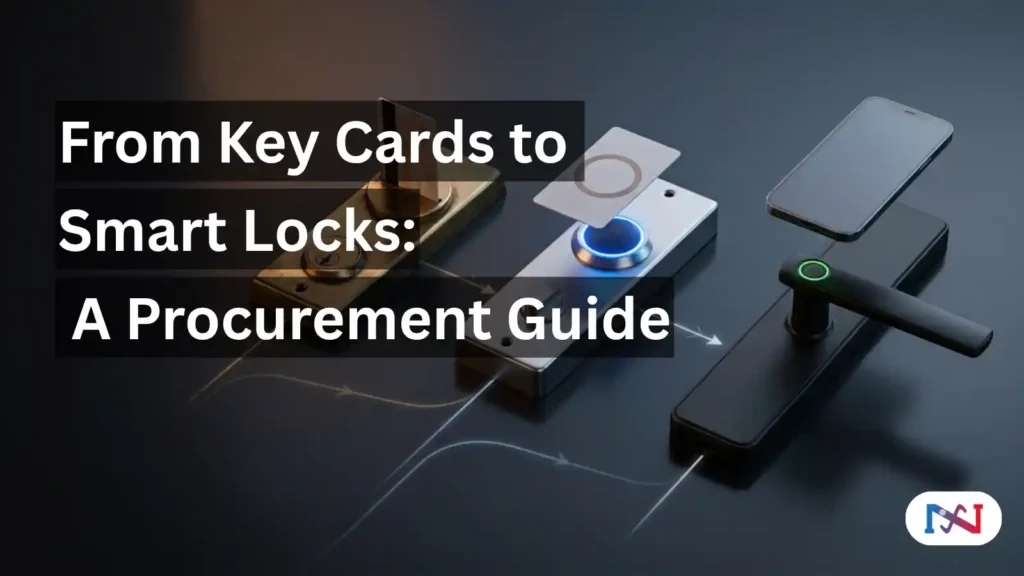
Hotel Lock Access Technologies Compared
Hotel access control has evolved from mechanical keys through magnetic stripe cards to today’s RFID, Bluetooth, and biometric systems. Each technology offers different trade-offs between guest experience, operational efficiency, security level, and infrastructure cost.
| Access Technology | How It Works | Guest Experience | Security Level | Infrastructure Required | Best For |
|---|---|---|---|---|---|
| RFID card (13.56MHz Mifare) | Contactless card held near reader zone | Familiar, intuitive, no app required | High — AES encryption, clone-resistant | Card encoder at front desk | Full-service hotels, all scales |
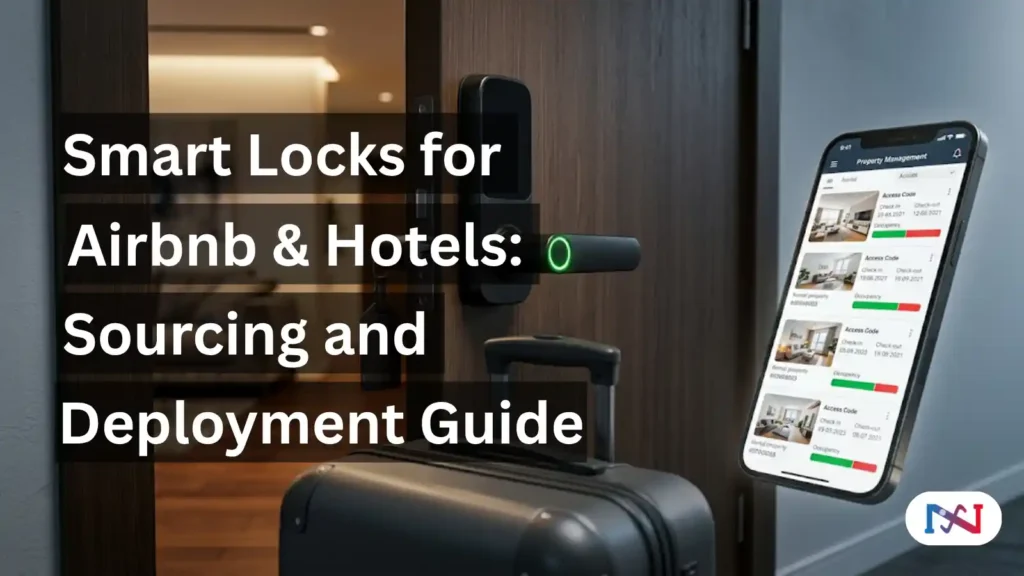
| Mobile Bluetooth (BLE) | Guest unlocks via smartphone app | Contactless check-in, no front desk stop | High — encrypted BLE pairing | BLE gateway for remote management | Tech-forward hotels, serviced apartments |
| PIN code | Guest enters numeric code on keypad | No card or phone needed | Moderate — code sharing risk | None beyond the lock | Short-term rentals, budget properties |
| Fingerprint biometric | Guest registers fingerprint at check-in | Keyless, personalized | Very high — unique biometric | Enrollment station | VIP floors, staff-only areas |
| Face recognition | 3D structured-light facial scan | Hands-free, premium | Very high — anti-spoofing | Enrollment station, higher unit cost | Luxury suites, high-security zones |
| Magnetic stripe | Card swiped through reader slot | Legacy, often demagnetizes | Low — easily cloned | Card encoder | Legacy properties (upgrade recommended) |
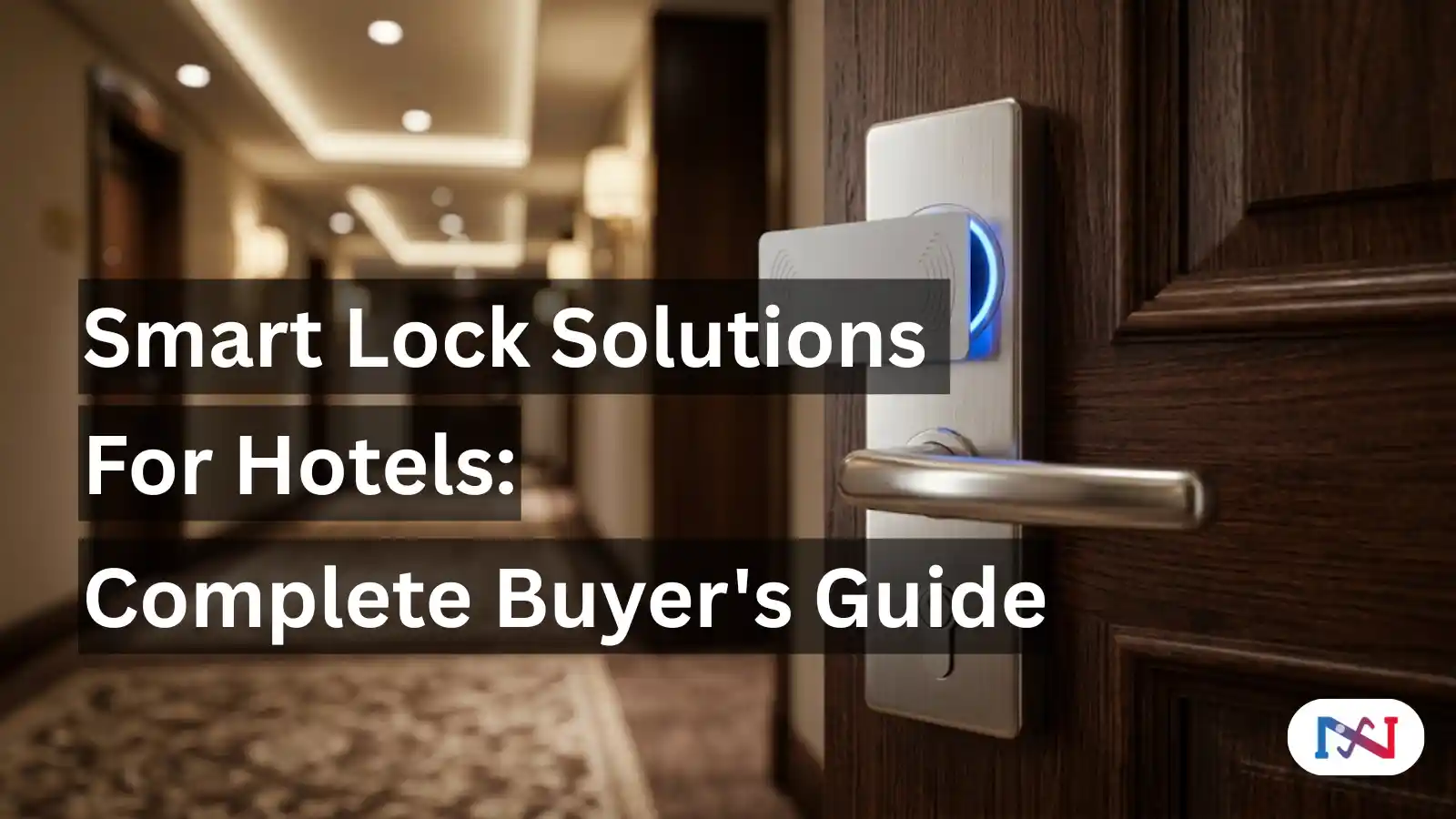
RFID card access remains the industry standard for hotel deployments because it delivers the optimal balance of guest familiarity, security, operational simplicity, and cost. Guests understand how to use a contactless card without instruction. RFID cards with AES encryption resist cloning attacks that plague magnetic stripe systems. Front desk staff can program cards in seconds using a desktop card encoder. And RFID locks operate on standard AA batteries with 10,000–12,000 operation battery life, eliminating the wiring complexity of hardwired systems.
For hotels that want to offer mobile check-in alongside RFID card access, dual-mode locks supporting both 13.56MHz Mifare cards and Bluetooth smartphone access provide a transition path without abandoning the card-based system that most guests expect.
RFID Card Hierarchy: How Hotel Card Management Works
RFID hotel lock systems use a hierarchical card structure that defines access permissions across the property. Understanding this hierarchy is essential for hotel operators planning a smart lock deployment.
Master card. The highest-level access card. Opens all locks in the property. Typically held by the general manager or security director. Used for initial system setup and emergency situations. A lost master card can be invalidated and replaced through the lock management system.
Building card. Opens all locks within a specific building. Used in multi-building hotel properties (resort complexes, conference centers with connected buildings). Allows building-level management without granting property-wide access.
Floor card. Opens all rooms on a specific floor. Assigned to floor supervisors and housekeeping leads. Enables efficient room servicing without requiring individual guest cards for each room.
Guest card. Opens only the assigned guest room during the stay period. Programmed at the front desk with check-in and check-out dates. Automatically expires at checkout time. Can be issued as a single card or as a pair for double-occupancy rooms.
Emergency card. Overrides the deadbolt position (interior privacy lock) and opens the door even when locked from inside. Used only in emergency situations by authorized personnel. Activity is logged with timestamp for audit purposes.
The SU7-03 RFID hotel lock supports this full five-level card hierarchy with 500-card capacity per lock, 13.56MHz Mifare card compatibility, and AES-encrypted card authentication. Cards are programmed using a desktop USB card encoder connected to the lock management software.
PMS Integration: Connecting Smart Locks to Hotel Operations
Property Management System (PMS) integration connects the smart lock system to the hotel’s operational software — synchronizing room assignments, guest check-in/check-out, access credential issuance, and lock status monitoring from a single dashboard.
TTLock platform integration. Nice Smart hotel locks connect to PMS platforms through the TTLock platform API. TTLock provides the middleware layer between the lock hardware and the PMS software, handling room access credential management, remote lock control, audit trail aggregation, and gateway-based communication.
The TTLock integration supports several operational workflows. Automated guest card provisioning links the PMS reservation to the lock system — when a guest checks in through the PMS, the card encoder automatically programs the RFID card with the correct room assignment, access start/end times, and card hierarchy level. Real-time lock status monitoring shows which doors are locked, unlocked, or in alarm state from the management dashboard. Access audit logs record every card-read event with timestamp, card ID, and door ID for security review. Remote lock control via TTLock gateway allows the front desk to lock or unlock doors remotely for maintenance access or emergency situations.
Compatible PMS platforms. TTLock’s API integration supports hotel PMS platforms that accept webhook or API-based room access management. Compatible systems include Oracle Opera PMS (widely used by international hotel chains), Cloudbeds (popular with independent and boutique hotels), and other cloud-based PMS platforms supporting REST API integration. The specific integration method (webhook, API call, middleware connector) depends on the PMS platform’s developer documentation.
Gateway infrastructure. TTLock gateways provide the network bridge between Bluetooth-connected locks and the cloud management platform. Each gateway covers approximately 10–15 locks depending on building layout and wall construction. Gateways connect to the hotel’s Wi-Fi network and relay lock status, access events, and remote commands between the locks and the TTLock cloud server. Gateway placement planning is part of the deployment engineering phase.
Hardware Specifications for Hotel-Grade Smart Locks
Hotel locks endure significantly higher use intensity than residential locks — a busy hotel room door may be opened 20–30 times per day across guest entries, housekeeping, maintenance, and minibar service. This operational intensity demands specific hardware specifications.
Lock body durability. Hotel-grade mortise lock bodies should be rated for 200,000+ open/close cycles, equivalent to approximately 10+ years of daily hotel use. Double-bolt lock body construction provides superior security and resistance to forced entry compared to single-bolt designs.
RFID specification. 13.56MHz operating frequency using Mifare Classic, Mifare Plus, or DESFire card protocols. AES encryption for card authentication prevents card cloning. Card capacity of 500+ cards per lock supports properties with high guest turnover and multiple staff access levels.
Power system. 4×AA alkaline batteries provide 10,000+ operations — approximately 12 months of standby life in a typical hotel usage pattern. Low-battery warning activates well before depletion. Emergency USB-C power port on the exterior panel allows temporary electronic power from a portable battery pack if batteries are fully depleted. Mechanical key backup provides manual access at all times regardless of battery status.
Water and dust protection. IP67 rating (complete dust protection plus temporary water immersion protection) ensures reliable operation in humid climates, coastal properties, and poolside installations. This rating is particularly important for resort and tropical hotel deployments.
Material and finish. Aluminium alloy construction with zinc alloy internal components. Available in gold, champagne, black, and silver finishes to match hotel interior design specifications. PVD coating provides scratch resistance and corrosion protection for high-traffic installations.
Door compatibility. Standard door thickness compatibility of 35–65mm covers the majority of hotel door configurations. For thicker fire-rated doors or non-standard preparations, mechanical adaptation is available through OEM customization for hotel lock projects.
Hotel Lock Deployment Planning
A hotel smart lock deployment involves more than purchasing locks. Successful projects require coordinated planning across hardware selection, infrastructure setup, installation logistics, and staff training.
Project scope assessment. Define the total number of doors requiring smart locks across guest rooms, corridors, staff areas, utility rooms, storage, gym facilities, and common areas. Different door types may require different lock models — RFID card locks for guest rooms, fingerprint locks for staff-only zones, cabinet locks for locker rooms. Mixed-model orders from a single manufacturer ensure consistent branding and simplified after-sales support.
For example, a 200-room hotel project might combine RFID card locks (SU7-03) for guest rooms, face recognition locks (SU7) for VIP suites or executive floors, compact handle locks (H3) for staff utility rooms, and smart cabinet locks (F40) for gym locker facilities — all supplied and branded consistently in a single shipment.
Phased delivery. For new construction projects, lock delivery is typically coordinated with the construction schedule — shipping locks in phases aligned with floor completion rather than delivering all units at once. This prevents on-site storage damage and aligns installation with the general contractor’s timeline. Nice Smart’s monthly production capacity of 8,000+ units supports phased delivery schedules for projects exceeding 1,000 rooms with dedicated project management.
Installation documentation. Every order includes installation guides with door preparation templates (dimensions and cutout specifications), wiring diagrams, and programming instructions. Video installation guides are available for select models. For large projects, on-site installation training can be arranged for the hotel’s maintenance team or contracted installer.
Gateway placement planning. For TTLock-connected deployments requiring remote management, gateway locations must be planned during the pre-installation phase. Typical placement follows one gateway per floor section, positioned centrally to maintain Bluetooth communication range with all locks in the coverage area.
Staff training. Front desk staff require training on card encoding procedures (issuing guest cards, programming floor/building cards, handling lost card replacement). Management staff require training on the TTLock dashboard for monitoring lock status, reviewing audit logs, and managing remote access.
Hotel Lock Project Cost Structure
Total hotel lock project cost includes hardware, software, installation, and ongoing operational components.
| Cost Component | Description | Scaling Factor |
|---|---|---|
| Lock hardware | RFID mortise locks — per-unit cost based on model and order volume | Per door |
| TTLock gateways | Bluetooth-to-Wi-Fi bridge units for remote management | Per floor section (1 gateway per ~10-15 locks) |
| Card encoder | Desktop USB card encoder for front desk card programming | Per front desk station (typically 1-2 per property) |
| RFID cards | 13.56MHz Mifare guest cards (reusable, reprogrammable) | Per room × guest turnover rate × replacement buffer |
| OEM branding | Logo engraving, custom card design, branded packaging | One-time setup + per-unit |
| Shipping and logistics | FOB/CIF/DDP from Shenzhen to project site | Per shipment |
| Installation labor | Door preparation, lock installation, gateway mounting | Per door (local contractor) |
| Training | Front desk and management staff training | Per property |
| Ongoing: batteries | 4×AA per lock, ~12-month replacement cycle | Per lock × annual |
| Ongoing: replacement cards | Guest card attrition from loss, damage, non-returns | Annual per property |
| Warranty and support | 12-month standard warranty; 24-month available for project orders | Included in purchase |
Lock hardware represents the largest single cost component. Volume pricing applies — projects above 500 units access the most favorable pricing tier. For accurate project-level pricing across specific models and configurations, request hotel project pricing and samples with your room count, door types, and customization requirements. For certification requirements for hotel locks in your target market, refer to our certification guide.
Why Hotels Are Replacing Magnetic Stripe with RFID
Hotels still operating magnetic stripe card systems face three accelerating problems. Security vulnerability — magnetic stripe cards can be cloned with inexpensive card readers available online, creating unauthorized access risk. Guest frustration — magnetic stripe cards demagnetize when stored near smartphones, room key wallets, or other magnetic sources, resulting in frequent lockout situations that require guests to return to the front desk for card replacement. Operational cost — each lockout event consumes front desk staff time, creates guest dissatisfaction, and increases card replacement volume.
RFID technology eliminates all three problems. Contactless 13.56MHz RFID cards with AES encryption resist cloning. RFID cards are not affected by proximity to smartphones or magnetic fields, virtually eliminating demagnetization lockouts. And RFID cards are durable, reusable across hundreds of reprogram cycles, reducing card replacement costs.
The transition from magnetic stripe to RFID does not require door replacement — modern RFID locks fit standard hotel door preparations. The primary investment is the lock hardware, card encoder, and initial RFID card inventory.
Frequently Asked Questions About Hotel Smart Locks
What type of smart lock is best for hotels?
RFID card-operated mortise locks using 13.56MHz Mifare technology with AES encryption are the industry standard for hotel deployments. RFID provides the optimal balance of guest familiarity, security, operational simplicity, and cost. Dual-mode locks supporting both RFID card and Bluetooth mobile access allow hotels to offer contactless check-in alongside traditional card-based access.
How do hotel smart locks integrate with PMS software?
Hotel smart locks integrate with PMS platforms through the TTLock platform API. TTLock provides middleware between lock hardware and PMS software, handling card credential management, remote lock control, and audit trail logging. Compatible PMS platforms include Oracle Opera, Cloudbeds, and other systems supporting webhook or REST API integration. TTLock gateways provide the network bridge between Bluetooth-connected locks and the cloud management platform.
What is a hotel card hierarchy system?
A hotel card hierarchy defines five access levels: master card (all doors, property-wide), building card (all doors in one building), floor card (all rooms on one floor), guest card (assigned room only, with check-in/check-out date restrictions), and emergency card (overrides interior deadbolt for emergency access). Each card type is programmed with specific permissions and expiration parameters through the lock management software.
Can hotel smart locks work without internet?
Yes. RFID hotel locks operate independently at the door level — access credentials are stored on the card and validated by the lock’s onboard processor. Internet connectivity (via TTLock gateway) adds remote management, real-time monitoring, and PMS integration, but the lock continues to function normally for card-based access during network outages.
What happens if a hotel smart lock battery dies?
Low-battery warnings activate well before full depletion, giving maintenance staff time to replace batteries proactively. If batteries are fully depleted, a USB-C emergency power port on the lock’s exterior panel allows temporary electronic power from a portable battery pack. Mechanical key backup provides manual access at all times regardless of battery status.
Can I mix different lock models in a hotel project order?
Yes. Mixed-model orders are standard practice for hotel deployments. A typical project combines RFID card locks for guest rooms, fingerprint or face recognition locks for staff-only areas, and cabinet locks for locker rooms — all supplied, branded, and shipped consistently from a single manufacturer to simplify procurement and after-sales support.
What is the MOQ for hotel smart lock orders?
MOQs for hotel lock orders start from 50 units on most models. For projects exceeding 1,000 rooms, dedicated project management and phased delivery schedules are available. Nice Smart’s monthly production capacity of 8,000+ units supports large-scale hospitality deployments with 7-day lead times on standard models and 15–25 days for OEM-customized orders.
What warranty is available for hotel lock projects?
Standard B2B warranty is 12 months from delivery date, covering manufacturing defects in materials and workmanship. Extended warranty up to 24 months is available for project-level orders. Spare parts and replacement units are stocked for rapid fulfillment during the warranty period. For an overview of Nice Smart certifications and production capacity, see our company profile.
Planning a hotel smart lock deployment? Nice Smart supplies RFID hotel locks, TTLock gateways, card encoders, and OEM branding services for hospitality projects of any scale. Our team provides project-level pricing, phased delivery planning, and technical consultation for Nice Smart hotel and hospitality solutions. Request hotel project pricing and samples or reach us on WhatsApp.