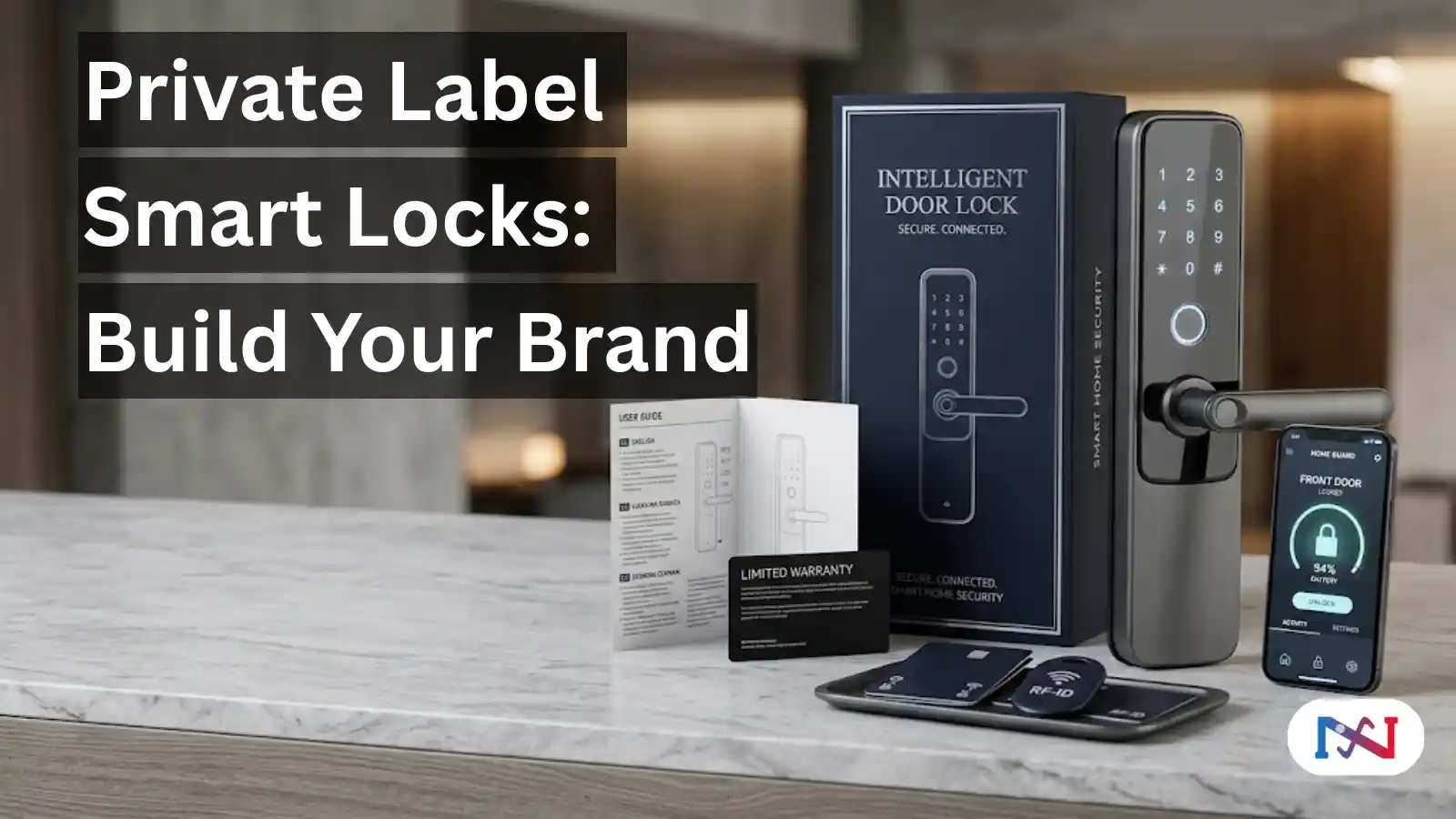
Private label smart locks allow distributors, entrepreneurs, and security companies to sell manufacturer-produced smart door locks under their own brand name — with custom logo engraving, branded packaging, app customization through Tuya OEM app service or TTLock platform binding, and multilingual user documentation. The manufacturer handles hardware engineering, production, certification (CE, FCC Part 15, RoHS), and quality control; the buyer owns the brand, the customer relationship, and the margin. Starting a private label smart lock business from a China factory requires minimum investment compared to designing products from scratch — MOQs start from 20 units on select models with lead times of 7–25 business days. This guide covers the complete private label process: market positioning, product selection, branding and customization, app configuration, packaging design, pricing strategy, and go-to-market execution. For a technical comparison of manufacturing models, see our OEM vs ODM manufacturing guide.
What Is Private Label Smart Lock Manufacturing?
Private label manufacturing is a business model where a factory produces products that are sold under another company’s brand. In the smart lock industry, this means the manufacturer designs, engineers, certifies, and produces the hardware, while the buyer applies their own brand identity — logo, packaging, app skin, user manual, and marketing materials — to the finished product.
Private labeling in smart locks is a form of OEM (Original Equipment Manufacturing). The buyer selects from the manufacturer’s existing product catalog, specifies the branding and customization requirements, and receives production-ready branded products without investing in hardware R&D, mold tooling, firmware development, or certification testing. The manufacturer’s existing CE, FCC, and RoHS certifications transfer directly to the private label product when the base hardware remains unchanged.
This model is distinct from ODM (Original Design Manufacturing), where the manufacturer creates an entirely new product design. Private label uses proven, certified hardware — reducing risk, cost, and time to market. For distributors and brands entering the smart lock market, private labeling provides a practical path to branded products with minimal upfront capital. A detailed comparison of these models is covered in our OEM vs ODM manufacturing guide.
Step 1: Define Your Market Position and Target Customer
Before selecting products or designing packaging, define who you are selling to and how your brand will be positioned. Smart locks serve multiple market segments, each with different buyer priorities, price sensitivity, and feature requirements.
Residential consumer market. Homeowners and renters who want convenient keyless entry. These buyers prioritize ease of installation, smartphone app integration (Tuya compatibility with Alexa and Google Home), aesthetic design, and price. Marketing channels include e-commerce platforms, home improvement retailers, and social media advertising. Product selection leans toward fingerprint + PIN + app models in the mid-range price tier.
Rental property and Airbnb operators. Property managers who need remote access management, temporary passcode generation, and audit trail logging. These buyers prioritize TTLock or Tuya remote management features, durability, and simplified guest onboarding. Marketing is typically B2B through property management forums, short-term rental associations, and direct outreach.
Hotel and hospitality operators. Hotel chains, boutique hotels, and serviced apartments requiring RFID card-based access with PMS integration. These are project-level B2B sales with longer decision cycles, technical evaluation processes, and volume pricing expectations. Product selection centers on RFID card locks like the SU7-03 hotel RFID lock with TTLock platform integration.
Commercial and office installations. Building managers needing multi-tenant access control with role-based permissions. Marketing through security integrator partnerships and commercial real estate channels. For detailed deployment configurations by industry, see industry-specific solutions.
Regional distribution. Hardware distributors and wholesalers adding smart locks to existing product catalogs. Focus is on competitive wholesale pricing, broad product range, and responsive supply chain support rather than end-user marketing.
Your market position determines product selection, pricing strategy, packaging design, and marketing approach. Define this before contacting manufacturers.
Step 2: Select Products from the Manufacturer’s Catalog
With your target market defined, select specific models from the manufacturer’s catalog that match your customers’ requirements and price expectations. A manufacturer with 30+ smart lock models across multiple categories enables a private label brand to launch with a complete product line from a single supplier.
Product selection should consider the following factors.
Access method mix. Match the access methods to your target market’s expectations. Residential buyers expect fingerprint + PIN + app + key. Rental property managers need remote passcode capability (Tuya or TTLock). Hotel operators require RFID card management with hierarchical card systems. Commercial buyers may need multi-factor authentication (fingerprint + PIN + RFID).
Lock form factor. Mortise locks (handle-style, most common for main entry doors), rim locks (surface-mounted, common in markets with existing door hardware), glass door locks (for commercial offices and retail), cabinet locks (for lockers, storage, gym facilities), and padlocks/U-locks (for warehouses and asset protection). Offering multiple form factors from a single manufacturer simplifies supply chain management and maintains brand consistency.
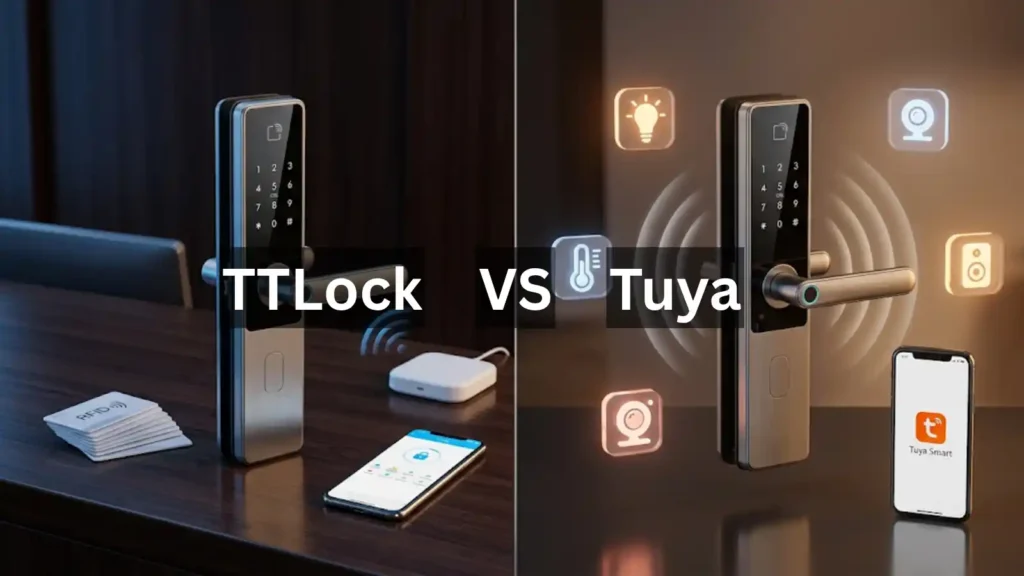
Connectivity platform. Tuya IoT for consumer/residential markets with Alexa and Google Home compatibility. TTLock for property management, hotel, and commercial deployments with gateway-based remote management. Some models support dual-platform configuration, allowing the same hardware SKU to serve different market segments based on firmware binding.
Price tier alignment. Entry-level models ($20–$40 wholesale) for price-sensitive markets. Mid-range models ($40–$75) like the Q1 slim profile lock for mainstream distribution. Premium models ($75–$120+) like the SU7 face recognition lock for high-end positioning. Detailed pricing by tier is covered in our manufacturing cost breakdown.
Start with 2–3 models that cover your primary market segment. Expand the product line as sales velocity confirms demand.
Step 3: Apply Your Brand — Logo, Finish, and Physical Identity
Branding transforms a manufacturer’s product into your product. The goal is a cohesive brand presence across every customer touchpoint — from the lock body itself to the packaging, documentation, and digital interface.
Logo engraving. Laser engraving or pad printing applies your company logo, brand name, and model number directly onto the lock body and/or interior panel. Provide vector files (AI, EPS, or SVG format) at minimum 300 DPI resolution for clean reproduction. Laser engraving on zinc alloy and aluminium alloy surfaces produces a permanent, professional mark that withstands daily handling without fading. Some models offer dedicated branding zones — the S9 glass door lock with custom logo area features a front panel section specifically designed for brand logo integration.
Surface finish selection. Choose finishes that align with your brand’s visual identity and target market aesthetic. Available finishes typically include matte black (contemporary, premium positioning), satin nickel (neutral, commercial-friendly), gold (luxury residential, Middle Eastern markets), silver (clean, modern), and bronze (traditional, architectural). PVD coating provides superior scratch resistance and corrosion protection compared to standard electroplating — important for products positioned as premium or deployed in demanding environments.
Model naming. Assign your own model numbers and product names. The manufacturer’s internal model designations (SU7, Q1, V8, etc.) are replaced with your brand’s naming convention in all customer-facing materials, packaging, and documentation. This is standard practice in private label manufacturing.
Step 4: Configure Your Branded App Experience
The mobile app is often the primary interface between your brand and your end customer. For smart lock private label brands, app customization is a critical brand-building layer that many first-time private label sellers overlook.
Tuya OEM app service. Smart locks running on the Tuya IoT platform support Tuya’s OEM app program, which allows the buyer to publish a custom-branded mobile application under their own brand name and icon on the Apple App Store and Google Play Store. The end user downloads “YourBrand Smart Home” instead of “Tuya Smart.” The app interface, color scheme, and splash screen carry your branding. Tuya handles the backend infrastructure, device pairing, user management, and cloud services. The OEM app inherits all Tuya ecosystem functionality including Amazon Alexa integration, Google Home compatibility, and IFTTT automation rules.
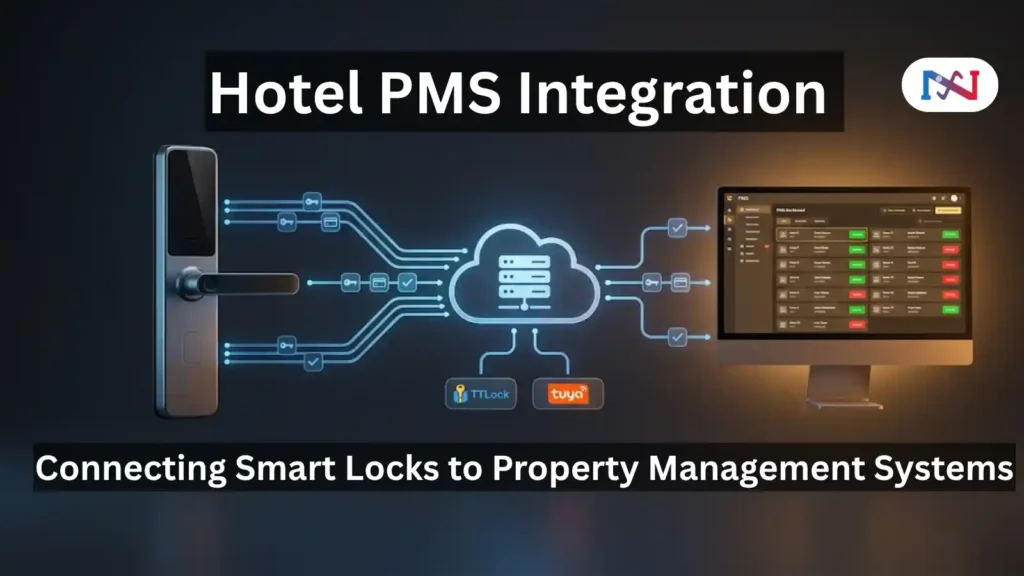
TTLock platform binding. For property management and hotel deployments, TTLock supports platform-level branding through its administrative dashboard. Property managers access lock management through TTLock’s interface, but the lock hardware carries your brand identity. TTLock’s API enables integration with third-party property management systems, allowing your branded locks to connect with PMS platforms used by hotels and rental operators.
App configuration during production. The manufacturer configures the platform binding and app association during the firmware flashing stage of production. Each unit ships pre-configured to connect to your branded app (Tuya OEM) or your specified TTLock account. This configuration is specified in the OEM order and handled during the OEM customization services setup phase.
Step 5: Design Your Packaging and Documentation
Packaging is the first physical interaction between your brand and the buyer. For e-commerce channels, it is also the product’s visual presence in search results and listing images.
Retail packaging. Custom-designed boxes with your brand identity, product photography, feature highlights, and multilingual text. Include a clear product image, key specifications (access methods, connectivity, compatibility), and regulatory markings (CE, FCC, RoHS logos). For e-commerce sellers, packaging should be designed to photograph well — clean backgrounds, visible brand name, and minimal visual clutter. The manufacturer typically provides packaging templates (dielines) with correct dimensions; the buyer supplies the graphic design files in print-ready format (PDF or AI with bleed marks and crop marks).
User manual. Multilingual installation guide with door preparation templates, wiring diagrams (where applicable), step-by-step programming instructions, app download QR code linking to your branded app, and troubleshooting reference. The manufacturer provides the technical content; the buyer applies their brand formatting, language selection, and support contact details. Common language combinations for international distribution include English, Spanish, French, Arabic, and Portuguese.
Accessory kit. Standard accessories included with each lock unit: mounting hardware, template sticker for door preparation, mechanical keys, RFID/IC cards (if applicable), USB-C charging cable or AA batteries, and warranty card with your brand’s support contact information.
Warranty card. Branded with your company’s warranty terms, support channels (email, phone, WhatsApp), and product registration instructions. This is your direct line to the end customer for relationship building, upselling, and repeat business.
If you do not have in-house packaging design resources, many manufacturers offer design assistance — providing layout support based on your brand guidelines and product photography.
Step 6: Plan Your Pricing and Margin Structure
Private label margin depends on the gap between your total landed cost (factory unit price + customization + packaging + shipping + duties + destination logistics) and your sell-through price. Smart lock private label margins are generally healthy compared to commodity hardware because the product category is still in growth phase, consumers have limited price reference points, and branded products command premium pricing over unbranded alternatives.
Landed cost calculation. Start with the factory unit price per your selected tier and volume (see our manufacturing cost breakdown for tier-by-tier pricing ranges). Add OEM customization costs (logo, packaging, firmware configuration), international shipping cost per unit, customs duties and import taxes (varies by HS code and destination country — see our importing guide with shipping and customs), and domestic logistics to your warehouse.
Retail pricing benchmarks. Branded smart locks retail between $80–$350 in consumer channels depending on features and brand positioning. Mid-range fingerprint + app smart locks typically retail at $120–$200. Premium face recognition models retail at $200–$350. RFID hotel locks are sold at project-level pricing (per-unit, negotiated). The gap between landed cost and retail creates the margin opportunity for private label brands.
Channel-specific pricing. E-commerce (Amazon, own website) supports higher retail prices due to direct-to-consumer margin capture. Wholesale distribution to retailers requires margin sharing — wholesale price is typically 40–50% of retail. B2B project sales (hotels, developers) are negotiated per-project with volume-based pricing.
Volume economics. First orders at MOQ levels (20–50 units) carry the highest per-unit cost and lowest margin. As volume scales to 200–500+ units per order, factory volume pricing improves, per-unit shipping cost decreases, and margin expands. Plan for compressed margins on initial orders while building brand recognition and sales velocity.
Step 7: Launch and Scale Your Private Label Brand
With products branded, packaged, and priced, execution shifts to market entry and scaling.
Start with a focused product line. Launch with 2–3 models covering your primary market segment rather than attempting to offer 10+ SKUs immediately. This minimizes initial inventory investment, simplifies marketing, and allows you to validate demand before expanding. A fingerprint + app mortise lock (mainstream residential), a face recognition premium model (high-end positioning), and a cabinet lock (accessory upsell) provides a focused but complete initial offering.
Build product content. Professional product photography, specification sheets, installation videos, and comparison guides. This content serves both e-commerce listings and B2B sales presentations. Your manufacturer can provide product images, CAD drawings, and technical specifications that your marketing team adapts for your brand.
Establish support infrastructure. Define warranty terms, return handling procedures, and customer support channels before the first sale. Stock a small quantity of replacement units for warranty fulfillment. Your manufacturer should maintain spare parts inventory for rapid replacement shipping during the warranty period — confirm this during the manufacturer evaluation process.
Scale through reorders. As sales data confirms which models and markets perform, increase order volumes to access better tier pricing. Expand the product line with additional models from the same manufacturer. Consider adding complementary products (glass door locks, cabinet locks, padlocks) to increase average order value. Explore exclusive territory agreements with your manufacturer for markets where you have established distribution.
Transition path. Many successful private label brands start with OEM (existing hardware, custom branding) and transition to ODM (custom-designed products) as sales volume justifies the engineering investment. ODM delivers product exclusivity — your product design is not available to competing distributors. This transition typically occurs at sustained volumes of 500+ units per month where the mold tooling and engineering investment can be recovered within 2–3 production runs.
Private Label Smart Lock Investment Summary
| Investment Category | First Order (Market Testing) | Growth Phase (Established Brand) |
|---|---|---|
| Product inventory | 20–50 units × unit price per tier | 200–500+ units × volume tier pricing |
| Logo engraving | Minimal — often included at MOQ | Included in unit price |
| Packaging design | Graphic design + printing setup | Amortized across volume |
| App customization (Tuya OEM) | Tuya OEM app setup fee (one-time) | None — app is live |
| Certification | None — transfers from base hardware | None unless electronics modified |
| Shipping | Air freight (higher per-unit) | Sea freight (lower per-unit) |
| Product photography | Initial investment | Incremental for new models |
| Marketing / listing setup | E-commerce listings, basic content | Expanded marketing, paid advertising |
| MOQ | 20–50 units | 200–500+ units |
| Lead time | 7–25 business days | 7–25 business days |
| Time to first sale | 4–8 weeks from order confirmation | Ongoing reorders |
Frequently Asked Questions About Private Label Smart Locks
Can I put my own brand on smart locks from a China factory?
Yes. Private labeling is a standard OEM service offered by smart lock manufacturers. The factory applies your brand through laser logo engraving on the lock body, custom-designed packaging with your branding, branded mobile app through Tuya OEM app service, multilingual user manuals with your support contact details, and branded warranty cards. The base hardware, certifications, and production quality are the manufacturer’s responsibility; the brand identity is yours.
What is the minimum investment to start a private label smart lock brand?
The minimum investment consists of the first product order (starting from 20 units on select models at the applicable wholesale tier price), packaging design and printing costs, and any one-time app setup fees for Tuya OEM branding. There is no tooling investment, no engineering cost, and no certification cost when using existing certified hardware. Total initial investment depends on the product tier selected and order volume — starting with 20–50 units keeps entry cost low for market testing.
How do I get my own branded smart lock app?
For Tuya-based smart locks, use Tuya’s OEM app service. This allows you to publish a custom-branded mobile application under your brand name on the Apple App Store and Google Play Store. The app carries your logo, color scheme, and splash screen while using Tuya’s backend infrastructure for device management, cloud connectivity, and smart home integration. The manufacturer configures the firmware to connect to your branded app during production.
Do I need separate certifications for my private label products?
No — when the private label order uses the manufacturer’s existing hardware without electronic modifications, CE, FCC Part 15, and RoHS certifications transfer directly. The manufacturer provides certification documents and test reports under their company name, which are valid for the hardware platform regardless of the brand label applied. New certification testing is required only if the electronic design is modified.
How many products should I launch with?
Start with 2–3 models covering your primary market segment. A typical initial lineup for residential markets includes one mid-range fingerprint + app model and one premium face recognition model. For commercial or hospitality markets, start with one RFID hotel lock and one fingerprint office lock. Validate demand before expanding the product line with additional models and form factors.
Can other distributors sell the same product under their brand?
With standard OEM private labeling, the base hardware platform is available to other buyers who may apply their own branding. Your brand differentiation comes from packaging, app branding, marketing, customer service, and market positioning — not hardware exclusivity. For product exclusivity, transition from OEM to ODM (custom hardware design) once volumes justify the mold tooling and engineering investment. Exclusive territory agreements with the manufacturer can also provide regional market protection.
What file formats does the manufacturer need for logo and packaging?
For logo engraving: vector files in AI, EPS, or SVG format at minimum 300 DPI resolution. For packaging design: print-ready PDF or AI files with bleed marks, crop marks, and color specifications (CMYK). The manufacturer provides packaging dieline templates with correct dimensions for each product model. If you lack design resources, some manufacturers offer packaging layout assistance based on your brand guidelines.
How long does it take to receive my first private label order?
Standard OEM private label orders with logo engraving and custom packaging ship within 7–25 business days from order confirmation, depending on order volume and customization complexity. Add international transit time (5–7 days by air, 20–35 days by sea) and customs clearance (2–5 days). Total timeline from order confirmation to warehouse delivery: approximately 3–6 weeks for air-shipped orders.
Ready to launch your own smart lock brand? Nice Smart provides the complete private label package — from product selection and logo engraving to branded app configuration, custom packaging, and international shipping. Start with as few as 20 units for market testing. Discuss your private label project with our team or reach us on WhatsApp.